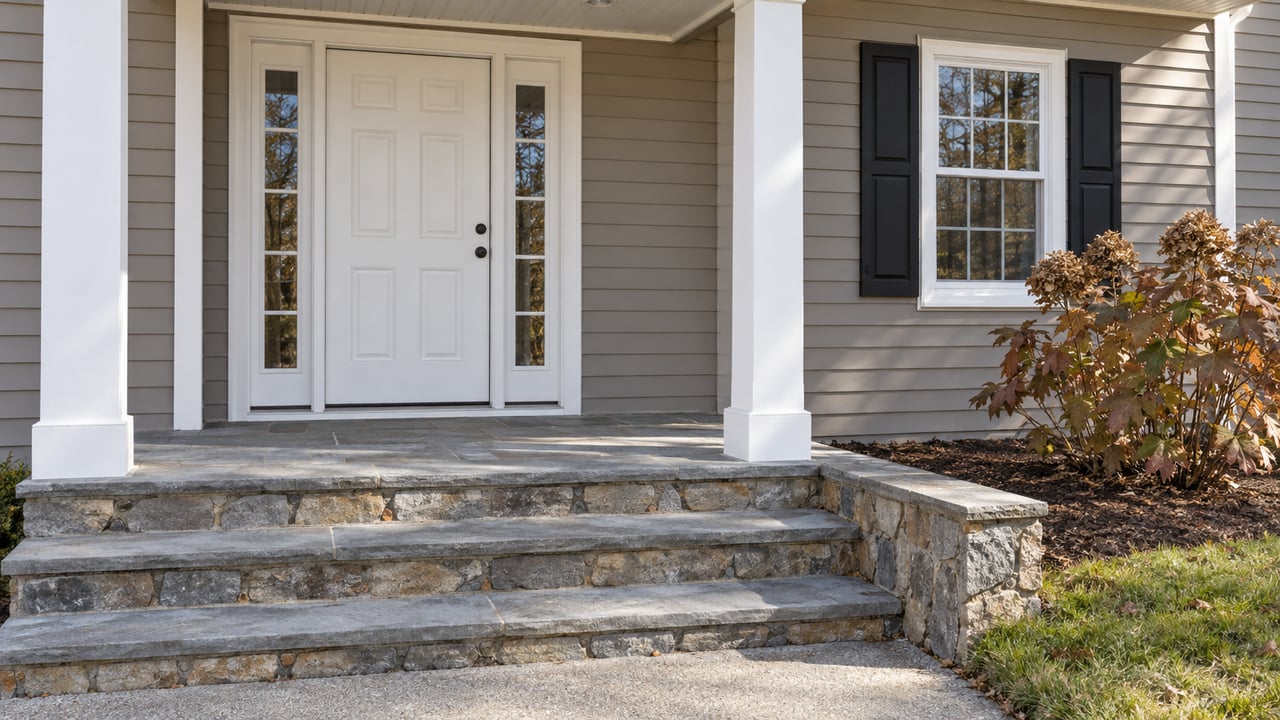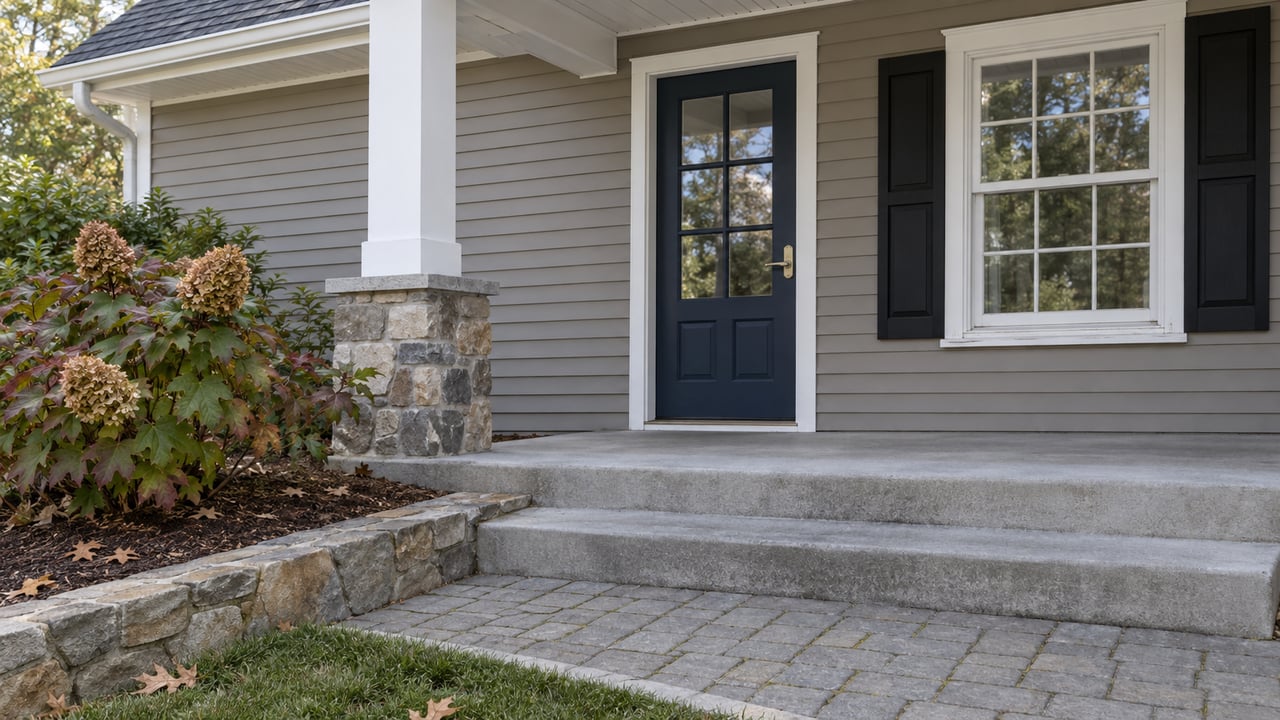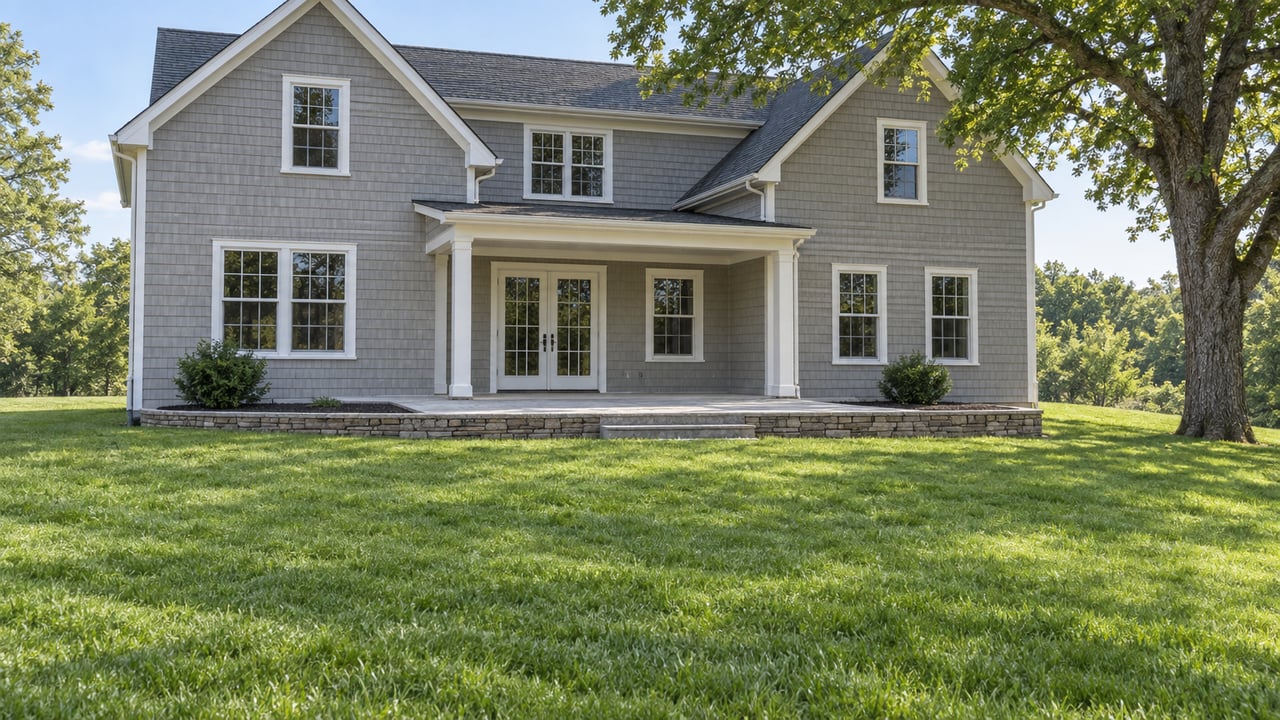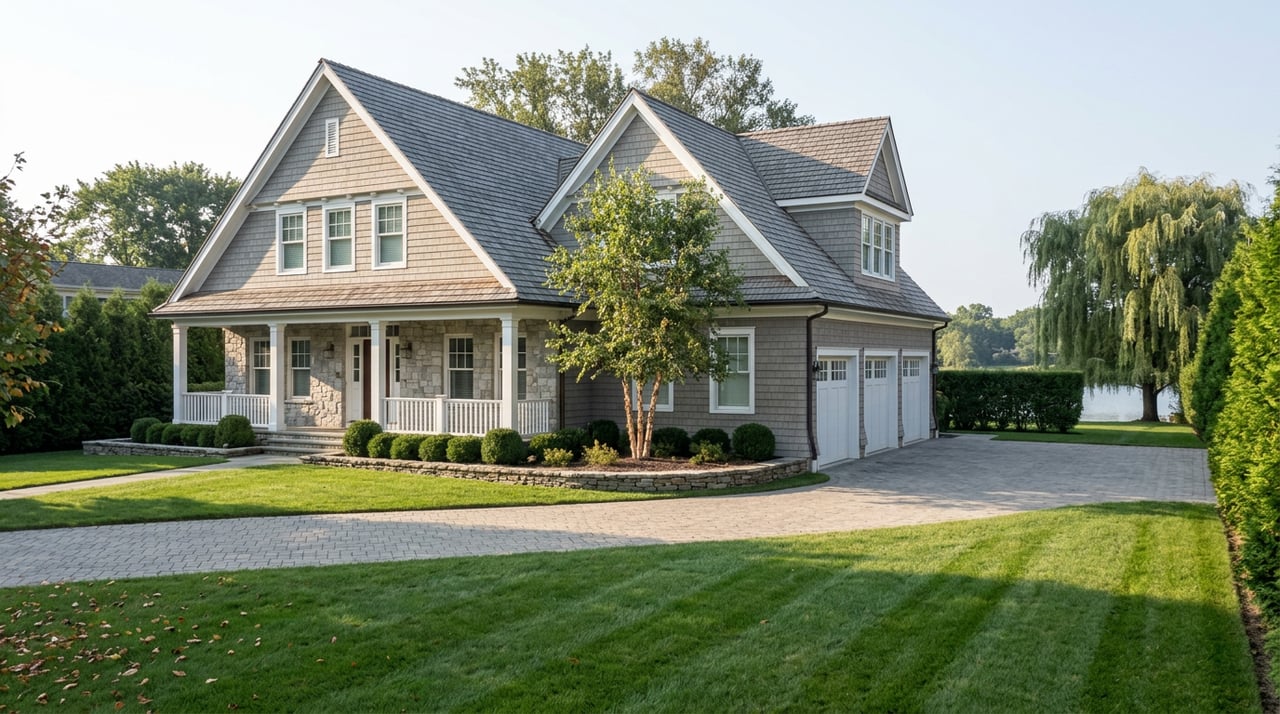
A listing on Turkey Point Island tells prospective buyers almost everything they need to know about renovation potential before they even schedule a showing. The lot sits on public sewer, carries R5 zoning, and already has extensive impervious surface covering the ground. Because of where it falls on Anne Arundel County's Critical Area map, the agent's remarks describe its renovation potential.
Drive five minutes to a similar-looking waterfront parcel on Selby Bay and the renovation potential could be different. Same river. Same zip code. Same general price range. A completely different set of rules governing what you're allowed to touch.
That gap is the thing worth understanding before you write an offer, and it's also the thing hiding inside Edgewater's current market numbers.
The number that doesn't add up on its own
Over the three months ending May 2026, the median sale price for an Edgewater home rose 4.4 percent year over year to $530,000. In the same window, the median price per square foot fell 7.8 percent to $277.
Those two figures are supposed to move together. When home values climb, the per-square-foot number usually climbs with them, because buyers are paying more for the same amount of house. When it falls while the overall price rises, something else is happening: the mix of what's selling has shifted, and buyers are pricing something other than square footage.
In Edgewater, that something is buildable rights. A smaller waterfront cottage with a favorable Critical Area designation can command a premium disproportionate to its finished square footage, because the buyer isn't really purchasing 1,400 square feet of 1950s cottage. They're purchasing the right to eventually build something much larger on that footprint. A larger home on a restricted lot, meanwhile, sells for less per square foot because there's no path to add on to it, and the ceiling on its value is the house that's already there.
Once you see that, the price-per-square-foot number stops looking like a market softening and starts looking like a market getting more selective about which lots actually have room to grow.
What actually splits one lot from another
Anne Arundel County sorts every parcel within 1,000 feet of tidal water into one of three Critical Area classifications, and the classification a lot lands in shapes what a renovation can legally become.
| Classification | What it generally means for owners |
|---|---|
| Intensely Developed Area (IDA) | Already built out at urban density. More flexibility for redevelopment and additions. |
| Limited Development Area (LDA) | Suburban-density development. Impervious surface capped between 15 and 31 percent of the site. |
| Resource Conservation Area (RCA) | Least developed. New residential building is more constrained and forest cover requirements are stricter. |
Layered on top of all three is a separate designation called a Buffer Modification Area, which applies where the standard 100-foot vegetated buffer along the shoreline doesn't fully exist anymore, often because a house was built decades before the buffer rule existed. Anne Arundel County's Critical Area program page spells out the practical effect of a BMA designation: new lot coverage cannot be placed nearer to the shoreline than the closest facade of the existing structure.
That single rule can constrain a comparable house two coves over, while the Turkey Point listing's expansion options depend on its own parcel-specific conditions. If the existing structure already sits close to the water, everything you build has to stay behind that line. You cannot go closer to the river, no matter how much lot you technically own between the house and the shoreline.
Anne Arundel County's planning office has ruled on this exact scenario in practice. In one Office of Planning and Zoning case involving a waterfront lot on the Little Magothy River, a homeowner wanted to demolish a dilapidated structure and rebuild. Because the site sat in a Buffer Modification Area, the new design had to keep every inch of construction no closer to the water than the old facade line, and the county's report on the case noted the proposed layout would be an improvement over what existed without requiring any Critical Area variance at all. The rule didn't block the rebuild. It just decided the shape it was allowed to take.
The same logic governs BMA lots throughout Turkey Point, Selby-on-the-Bay, Beverly Beach, and every other Critical Area waterfront pocket of Edgewater. It's a countywide rule, not an Edgewater-specific one, but Edgewater's density of older waterfront cottages built well before 1988 means the county encounters it here constantly.
The permit myth that costs people money
There's a piece of secondhand advice that circulates among waterfront owners in this county, and Anne Arundel County's own Critical Area FAQ addresses it directly because staff hear the question, in their words, several times a week: that any tree under four inches in diameter on a waterfront lot can be removed without a permit.
The county's answer is unambiguous. That is not true. Every tree, shrub, and vine within the Critical Area is considered habitat and falls under Critical Area law regardless of trunk size.
For a seller staging a waterfront property to open up a water view, or a buyer planning to clear a sightline before closing, this isn't a minor technicality. It's the difference between a landscaping weekend and a permit process with a county forester.
What this means before you write an offer or set a list price
If you're evaluating a waterfront property in Edgewater with renovation in mind, the appraisal and the square footage are the easy part. The Critical Area classification is the part that determines whether your plans are realistic.
- Ask for the parcel's Critical Area classification, IDA, LDA, or RCA, before you assume anything about expansion. It changes the math on lot coverage limits.
- Find out whether the lot sits in a Buffer Modification Area. If it does, any new construction is locked behind the existing facade line, regardless of how much yard sits between the house and the water.
- Check with the county's Compliance Division before removing vegetation, even a handful of small trees for a better water view.
- Separate "waterfront" from "water-privileged" in your search. Many Edgewater communities, including Selby on the Bay and Londontowne, include both direct waterfront lots subject to the full Critical Area buffer and water-privileged lots with shared access that carry different exposure.
- Budget for the timeline. A straightforward permit can move quickly, but anything touching the buffer or requiring a variance adds review time that a renovation schedule needs to account for.
None of this is about discouraging waterfront renovation in Edgewater. The county continues to approve rebuilds and additions on BMA lots regularly, including the Little Magothy River case above. It's about knowing which version of the rulebook applies to the specific parcel in front of you before you price a project or price a listing.
There's a broader reason the county holds this line as tightly as it does. Arundel Rivers Federation, the Edgewater-based organization that grew out of the original South River Federation, released its 2025 River Report Card showing the South River scoring 52 percent, a grade of C, based on a full season of water quality monitoring. The buffer and vegetation rules that shape what you can build are the same rules meant to keep that number from sliding further. For owners who bought into the South River lifestyle in the first place, that context tends to matter as much as the permit process itself.
A few questions we hear often
Does a water-privileged lot carry the same Critical Area restrictions as a direct waterfront lot? It depends on the parcel's distance from tidal water, not on whether it has a private pier. A water-privileged lot within 1,000 feet of the shoreline is still inside the Critical Area and subject to the same classification system.
Can I request a variance if my BMA lot's facade line makes a renovation impractical? Variances are handled case by case through the county's Board of Appeals process, and outcomes depend heavily on site specifics. It's a conversation to start early with the Office of Planning and Zoning, not something to assume going into a contract.
Does a home's Critical Area status show up in a standard listing? Sometimes, when the listing agent knows to include it, as with the Turkey Point example above. It isn't a required MLS field, which is exactly why it's worth confirming directly rather than assuming from the listing description alone.
Edgewater's waterfront market rewards buyers and sellers who understand what's actually being priced into a lot, not just what's printed on the square footage line. If you're weighing a purchase, a renovation, or a sale on the South River and want a clear read on what your specific property can and can't do, Erica Baker can walk the Critical Area math with you before you commit to a plan.
This article is general information, not legal, tax or financial advice. Consult a qualified professional about your situation.