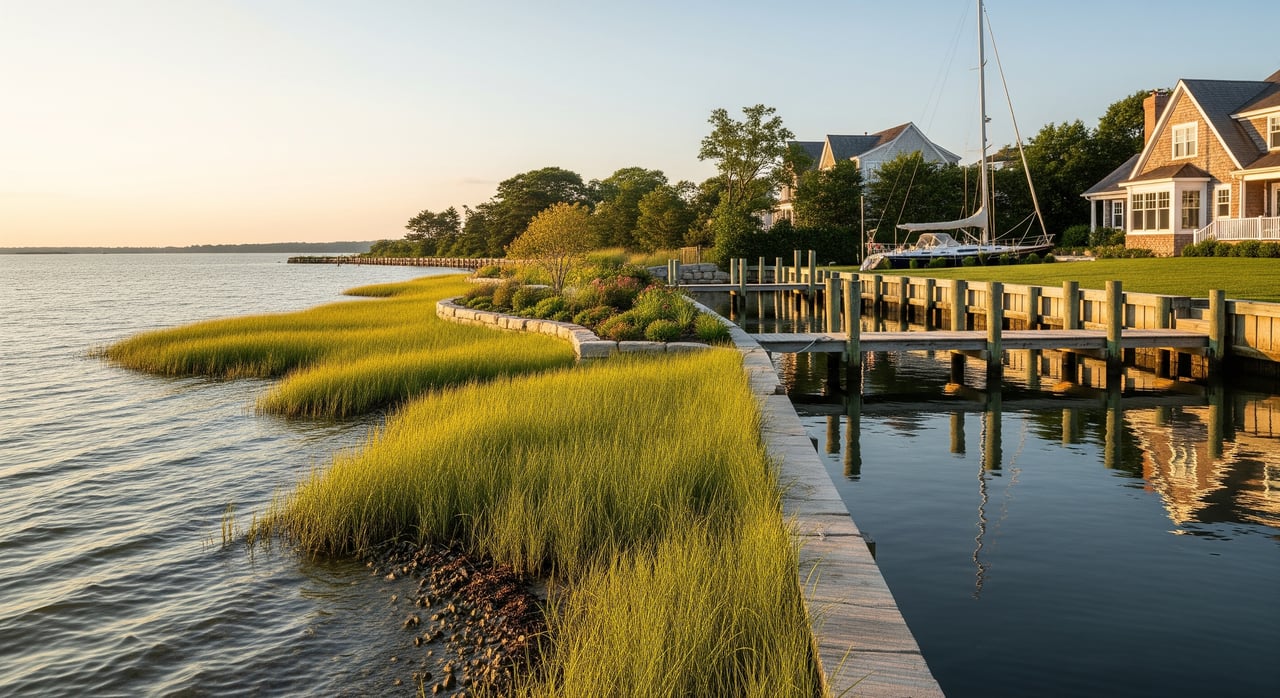
Picture your Arnold backyard on a summer evening: boats idling by, blue crabs in the shallows, and a shoreline that looks great today and still works for you years from now. If you own or are buying waterfront here, your shoreline choice affects daily enjoyment, maintenance, permits, and resale. The two most common paths are a living shoreline or a vertical bulkhead, and each one shines in different conditions. In this guide, you’ll learn how they compare for Arnold’s Severn and Magothy waters so you can choose with confidence. Let’s dive in.
Arnold waterfront realities
Arnold sits on the Broadneck Peninsula along tidal waters that feed the Severn River, Magothy River, and the Chesapeake Bay. Your shoreline sees tidal changes, boat wakes, wind-driven waves, and occasional storm surge. The Bay region is also experiencing relative sea-level rise, which means long-term planning matters.
Most waterfront parcels fall under Maryland’s Critical Area program. Projects here are reviewed at the state and county level, and work in tidal waters can trigger federal review. Your choice is shaped by site exposure, habitat nearby, and the permits you can obtain.
Living shoreline basics
A living shoreline stabilizes your bank using natural elements like native marsh plants, coir logs, graded banks, and sometimes offshore stone sills. The goal is to absorb wave energy, trap sediment, and let vegetation establish. When designed for the right site, the result can look like a natural marsh edge that blends with the Bay.
Performance depends on water depth, fetch, and bank slope. Low to moderate energy sites across the Chesapeake often suit this approach. Higher energy sites may need hybrid designs that layer stone with vegetation for stability.
Bulkhead basics
A bulkhead is a vertical wall made of wood, vinyl, steel, or concrete that holds back soil and creates a clear upland-to-water edge. It delivers immediate erosion control and a tidy line at the water. Many owners like the crisp look and the way it pairs with a lawn and dock.
All walls eventually weather. Bulkheads reflect wave energy, which can scour the bottom in front of the wall and sometimes affect neighboring parcels. Over time, tiebacks, panels, and joints need inspection and repair.
Side-by-side comparison
Erosion control and durability
- Living shoreline: Reduces wave energy and can grow stronger as plants mature and sediment accumulates. Early years are critical for establishment. High-energy sites often need a hybrid or hard structure.
- Bulkhead: Provides strong, immediate protection for the bank. It reflects energy, which can accelerate scour and may shift erosion pressures.
Maintenance
- Living shoreline: Seasonal plant care, invasive control, and touch-ups after storms. Stone sills and coir logs may need inspection and occasional repair. Effort is highest during the first one to three growing seasons.
- Bulkhead: Monitor for rot, corrosion, joint failure, tieback issues, and base scour. Repairs can be disruptive. Full replacement is a major project.
Lifespan and lifecycle costs
- Living shoreline: With good design and healthy vegetation, it can provide durable protection and habitat with fewer heavy rebuilds. Performance ties to site conditions and plant health.
- Bulkhead: Lifespan varies by material and exposure. Expect periodic major repairs or replacement over the decades, especially as water levels rise.
Aesthetics and access
- Living shoreline: Natural look, more wildlife, and a soft transition to the Bay. Direct lawn-to-water access may change, but docks remain workable with thoughtful grading or steps.
- Bulkhead: Clean, vertical edge that many boaters like. Visual impact is crisp, though nearshore habitat is reduced.
Costs
Project cost depends on shoreline length, exposure, materials, engineering, and permits. In many low to moderate energy settings, living shorelines can be cost-competitive. When you factor lifecycle maintenance and replacements, the long-term math can favor a living approach on suitable sites. Always compare site-specific bids and designs.
Permits in Anne Arundel County
Shoreline work usually involves multiple agencies:
- Maryland Department of the Environment: Tidal wetlands and waterways permits for living shorelines and bulkheads.
- U.S. Army Corps of Engineers: Federal permits for structures in navigable waters and any fill in wetlands.
- Anne Arundel County: Local permits, Critical Area compliance, and related reviews.
Living shorelines sometimes qualify for streamlined pathways in Maryland, but they still require documentation and agency review. Bulkheads often involve more complex review because they alter the immediate shoreline and intertidal area. Plan for several weeks to months for design and permitting.
Climate resilience in the Bay
Relative sea-level rise affects how well each option performs over time. Living shorelines can adapt by trapping sediment and migrating landward where space allows. Bulkheads offer fixed elevation protection, which can face more frequent overtopping and adjacent erosion as water levels rise. For major renovations, think in terms of decades, not just the next storm season.
Resale and buyer appeal in Arnold
Buyer preferences vary. Many eco-minded buyers appreciate the natural look and habitat of a living shoreline and view it as a resilience investment. Boaters and buyers who want a neat lawn-to-water edge often favor bulkheads for perceived convenience.
Regardless of type, documentation supports value. Buyers and appraisers look for permits, installation dates, maintenance records, and compatible dock access. A neglected bulkhead or an unestablished living shoreline raises red flags. A well-executed project with a clear maintenance plan is a plus at resale.
How to decide: site checklist
Before you commit, walk your site or potential purchase with this lens:
- Physical factors:
- Orientation and dominant wind or wave direction
- Nearshore depth and tidal range for plant establishment
- Bank slope and soil type
- Nearby habitat such as marsh, submerged vegetation, or oyster beds
- Boat wake exposure from neighborhood traffic
- Legal and regulatory:
- Location within the Critical Area and any tidal wetlands
- Required approvals from county, state, and federal agencies
- Any utility or riparian easements near the water
- Neighborhood and market fit:
- Typical shoreline treatments along your cove or street
- Dock norms, mooring needs, and buyer expectations in your area
Questions to ask designers and contractors
- Will you provide a site-specific design by a licensed engineer or certified living shoreline professional?
- Can you show recent local projects with similar fetch and tidal conditions?
- What is your plan for permitting with Anne Arundel County, the state, and the Corps?
- What is the maintenance plan, warranty, and monitoring schedule?
- Can you break out costs for materials, installation, permits, plantings, and follow-up work?
Timeline at a glance
- Site evaluation and concept design: weeks to months, based on complexity
- Permit submittals and agency review: weeks to months, multi-agency
- Installation window: may align with tides and planting seasons
- Post-construction monitoring: common for living shorelines during establishment
When a hybrid makes sense
If your site faces more wave energy than a pure living shoreline can handle, a hybrid can bridge the gap. Stone sills with marsh plantings behind or a revetment with a vegetated terrace can combine protection with habitat value. These designs still need careful engineering and permits but often deliver a balanced result.
Buyer and owner documentation checklist
- For living shorelines: stamped plans, permits, contractor credentials, planting species list, maintenance schedule, and any grant paperwork.
- For bulkheads: installation date, material type, tieback details, inspection records, and expected remaining life.
- For any project: photos before and after, warranties, and notes on storm performance.
Smart next steps in Arnold
- Schedule a professional site assessment with a coastal engineer or certified living shoreline contractor.
- Request a permit feasibility review before committing to construction.
- Ask about cost-share or grant opportunities through state or county environmental programs and trusted Bay organizations.
- Keep organized records. Clear documentation supports enjoyment now and value when you sell.
When you want a local, renovation-savvy perspective on how shoreline choices play into lifestyle, maintenance, and resale, reach out to Erica Baker. We help you weigh tradeoffs and present your waterfront’s strengths with confidence.
FAQs
Will a living shoreline work on a typical Arnold, MD cove?
- It depends on wave energy, nearshore depth, and bank slope. Many low to moderate energy sites are good candidates, while higher energy locations often need a hybrid design.
Are living shorelines less expensive than bulkheads over time in Arnold?
- Initial costs vary by site, but lifecycle costs can favor living shorelines on suitable shorelines. Compare multiple local bids and include maintenance and replacement in your math.
How long does a living shoreline take to establish on the Severn or Magothy?
- Most plantings settle in over one to three growing seasons. Early care and monitoring are important for success.
Will a bulkhead eliminate erosion issues for my Arnold property?
- A bulkhead protects the bank but reflects wave energy, which can cause scour in front of the wall and stress nearby areas. Periodic repair or replacement is common.
Do permits differ between living shorelines and bulkheads in Anne Arundel County?
- Yes. Both require review, but living shorelines can sometimes use streamlined pathways in Maryland. Expect involvement from the county, state environmental regulators, and the U.S. Army Corps of Engineers.