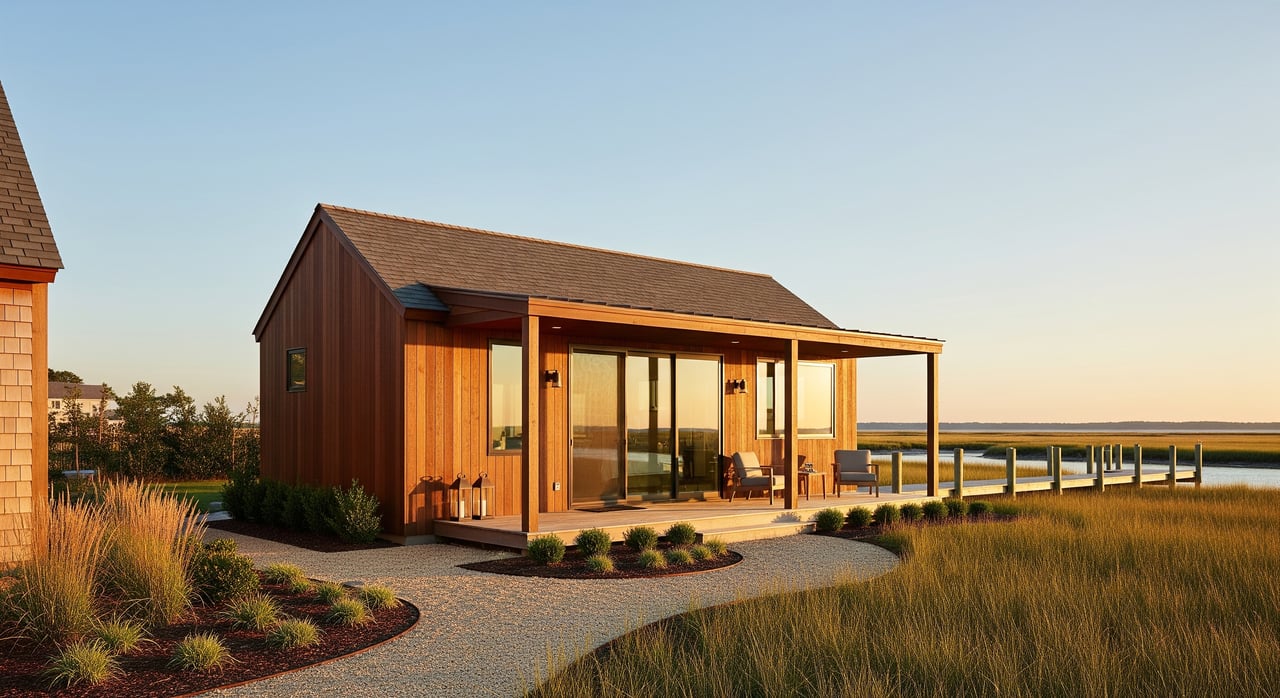
Thinking about adding a backyard cottage or in-law suite in Stevensville? You are not alone. More homeowners want flexible space for family, work, and potential rental income. This guide breaks down what Queen Anne’s County allows, the size and owner rules to know, key site constraints, the permit path, and what affects timing and cost. Let’s dive in.
ADU basics in Stevensville
Accessory apartments are allowed in Queen Anne’s County on single-family lots. You can place an ADU inside your main home or within an approved accessory structure. The ADU cannot exceed 1,500 square feet, and the owner of the principal dwelling must live on the property. Accessory apartments are not counted as a separate principal unit for density. Review the county’s accessory apartment standards in the zoning code for exact language and definitions in Queen Anne’s County code.
Zoning and overlays to check
Stevensville properties sit within Queen Anne’s County’s zoning system, including local districts such as the Stevensville Historic Village Center. Each district can have added standards for site layout, appearance, or placement. Confirm your parcel’s zoning district and any special overlays before you design. You can start by reviewing the county’s district framework and then verify details with Planning & Zoning in the zoning districts section.
Utilities, sewer, and septic
If your home is served by public sewer and water, you may need connection approvals and fees through the Queen Anne’s County Sanitary District. Capacity can vary by subdistrict on Kent Island, so ask early about availability and process on the Sanitary District page.
If your property uses a private septic system or well, expect a health review. Adding a dwelling often triggers percolation testing and may require system upgrades or a new disposal area under Maryland regulations. You can review state wastewater rules that guide local decisions in Maryland’s COMAR.
Critical Area and floodplain rules
Many Stevensville parcels fall within Maryland’s Chesapeake Bay Critical Area. This overlay can limit new structures, clearing, and impervious surfaces, and it may require mitigation or special approvals. Learn how Critical Area review works at the state level through Maryland DNR, then confirm your parcel’s status with county staff.
Parts of Kent Island are also in FEMA Special Flood Hazard Areas. New construction in these zones can require an elevated foundation, flood vents, and added engineering, which can raise costs. Check your property’s floodplain and base flood elevation using Maryland’s DFIRM resources on the state flood map portal.
Historic district design review
If your home lies in the Stevensville Historic District, exterior changes and new accessory structures may require design review. Standards can address materials, siting, and how additions appear from the street. A quick status check helps you avoid redesigns later. For context on the historic area, see the Stevensville Historic District summary, then confirm requirements with county Planning.
Setbacks and building code
Detached ADUs must meet accessory structure rules and setbacks, which can vary by district. Building code standards apply to all ADUs, including egress, fire safety, plumbing, and insulation. Conversions, like basements or garages, often need upgrades to meet code. You can preview permit and code references used by county reviewers in the adopted code resources.
Permitting steps
Here is a typical path in Queen Anne’s County. Timelines vary, so speak with staff early.
- Preliminary check: Confirm your zoning district, overlays, and whether an accessory apartment is permitted on your lot. Ask about Critical Area, floodplain, and any historic review.
- Utilities and health: Verify public sewer capacity or start septic review. If on septic, expect a site evaluation and possible perc testing.
- Design and plans: Prepare a simple site plan and ADU drawings that show setbacks, lot coverage, utilities, and code compliance.
- Submit applications: File building and zoning applications, and any health or environmental permits as needed. County intake and contacts are listed on the Queen Anne’s permit guidance page.
- Inspections and occupancy: Schedule required inspections and obtain final approval before using or renting the ADU.
Timeline and costs
Most projects move through research and design in 2 to 8 weeks, county reviews in 4 to 12 or more weeks, and construction in 3 to 12 months. Critical Area, floodplain, historic review, or septic work can add time. Typical cost drivers include design fees, permit and connection fees, septic upgrades, elevated foundations in flood zones, electrical panel upgrades, and labor and materials.
Pre-application checklist
- Confirm zoning, Critical Area, floodplain, and any historic status for your parcel. Review district basics in the zoning districts section.
- If on public utilities, ask the Sanitary District about capacity and connection steps for your subdistrict on the Sanitary District page.
- If on septic/well, plan for a health review and be ready for perc testing if records are incomplete. Reference state wastewater rules in Maryland’s COMAR.
- Verify the owner-occupancy requirement and how it applies to your use. Review the accessory apartment standards in the county code.
- Sketch a simple site plan locating lot lines, structures, driveways, utilities, and any septic components before meeting with county staff or a designer.
Make a smart plan
An ADU can help you support multigenerational living, host guests, or create a long-term rental option, as allowed. In Stevensville, the biggest hurdles are often utilities, Critical Area and floodplain rules, and site fit within setbacks. A short pre-application call with county staff can save weeks and prevent redesigns. If you want help weighing costs and resale impact in the broader Chesapeake Bay market, connect with Erica Baker for renovation-savvy, high-touch guidance.
FAQs
Are detached ADUs allowed in Stevensville?
- Yes. Queen Anne’s County allows an accessory apartment within an accessory structure if you meet size, setback, utility, and overlay rules; see the standards in the county code.
What is the maximum size for an ADU?
- The ADU cannot exceed 1,500 square feet of total floor area, and other site limits may reduce feasible size.
Do I have to live on the property if I have an ADU?
- Yes. The owner of the principal dwelling must reside on the property for an accessory apartment to be used.
How do flood zones affect an ADU near the Bay?
- Building in a mapped flood zone can require elevated foundations, flood vents, and added engineering, which can raise costs and affect design.
What if my property uses a septic system?
- Adding a dwelling often requires a health review, perc testing, and possibly a septic upgrade to meet Maryland wastewater standards.